
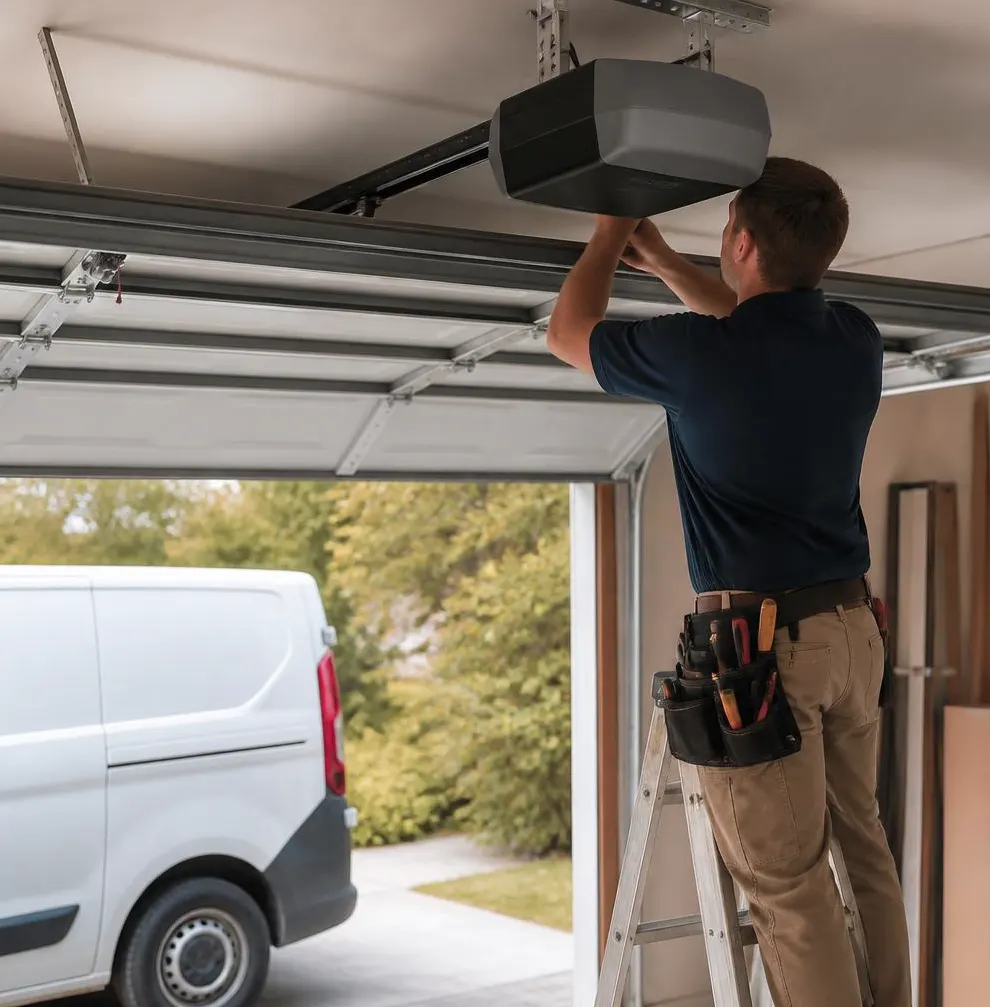
As a rule of thumb, if your opener was made in the last 15 to 20 years, you can reprogram remotes and reset keypad codes yourself with nothing more than a stepladder and a few minutes. The exceptions: openers old enough to use dip-switch codes instead of rolling codes, wall units with no visible Learn button, and any situation where the door itself starts behaving strangely once you start messing with the electronics. That last one usually points to a spring, cable, or sensor problem that has nothing to do with programming, and poking at it yourself can turn a small issue into a bigger one.
Tools You'll Need
- A stepladder tall enough to reach the motor unit comfortably
- Your opener's brand and model number (printed on the motor housing)
- A flashlight — garages without great lighting get dark fast once daylight savings ends
- A pen, pencil, or small screwdriver to press a recessed Learn button
- Fresh batteries for the remote and keypad
Step-by-Step: Reprogramming a Remote
- Locate the Learn button on the motor unit. It's usually on the back or side near the antenna wire and will be purple, yellow, orange, or green depending on the brand.
- Press and release the Learn button. An indicator light will stay lit for about 30 seconds — that's your programming window.
- Within that window, press and hold the button on the remote you want to pair. Release once the opener's light blinks or you hear the motor click.
- Test the remote from inside the garage first, then from a car outside with the door in view. Metal doors and damp summer air can weaken signal range, so it's worth confirming it works at normal driveway distance, not just up close.
- Repeat the process for each additional remote or vehicle-mounted opener you own.
Step-by-Step: Resetting or Changing a Keypad Code
- Press the Learn button the same way you would for a remote.
- While the indicator light is on, enter the new code on the keypad — most systems use a 4-digit code, though some allow longer custom entries.
- Press the keypad's Enter or Program button to lock in the new code.
- Walk through the door at least twice with the new code before considering it done. A code that works once but not twice usually means a battery or contact issue, not a programming mistake.
- Replace keypad batteries at least once a year. Humid summers and winter condensation both work their way into keypad housings over time, and corroded contacts are one of the most common reasons a correctly programmed code suddenly stops working.
Lost or Stolen Remote? Do This Right Away
A missing remote is a security gap, not just an inconvenience — treat it the way you'd treat a lost house key.
- Don't just program a replacement remote and move on. The lost one is still active until you clear it.
- Press and hold the Learn button for 6 to 10 seconds, until the opener's indicator light blinks rapidly or turns off. This wipes every remote and keypad code from the opener's memory at once.
- Reprogram each remaining remote and the keypad individually, using the steps above.
- Change the keypad's numeric code at the same time, since the old one was paired to the system the lost remote used.
- If your opener is old enough to use a fixed, dip-switch code rather than a rolling code, consider that an actual security weakness. Fixed codes can be captured and reused with cheap code-grabbing devices sold online. Rolling-code systems change the signal every single use and are much harder to duplicate — upgrading the logic board or the whole unit closes that gap for good.
What a Homeowner Can Handle vs. What Needs a Technician
You can safely handle: reprogramming remotes, resetting or changing keypad codes, swapping batteries, and wiping the opener's memory after a lost remote.
Call a technician when:
- The Learn button doesn't respond at all, even after holding it — this often points to a failing circuit board inside the motor unit.
- A remote works inconsistently even with new batteries, which usually means a weak receiver antenna rather than a programming error.
- Keypad wiring looks frayed, cracked, or corroded, which is more common in older houses where the wiring runs through an exterior wall exposed to heavy rain or coastal storm moisture.
- You want to replace a fixed-code system with a rolling-code opener for better security.
- A commercial property needs multiple keypads or access codes coordinated across more than one door.
- While reprogramming, you notice the door doesn't close fully, reverses unexpectedly, or struggles on cold mornings — those are spring, cable, or sensor issues that happen to surface during keypad work, and they're worth having looked at before ice season makes them worse.
When to Call Fredericksburg Garage Door Works
If you've wiped the memory and the opener still won't accept a new remote or code, or you're ready to retire a decade-old fixed-code system before another winter of ice and power blips, that's a job for Opener Repair & Installation rather than another round of trial and error. Our technicians also build a full keypad, wiring, and sensor check into every Preventive Maintenance visit, so corrosion from a humid Virginia summer or water intrusion from fall storms gets caught in the garage, not discovered at 10 PM when you're locked out.
If you're searching for a garage door company in Fredericksburg VA that actually shows up when scheduled, call Fredericksburg Garage Door Works for garage door repair near Stafford and Fredericksburg, or to book a maintenance visit before winter sets in.